
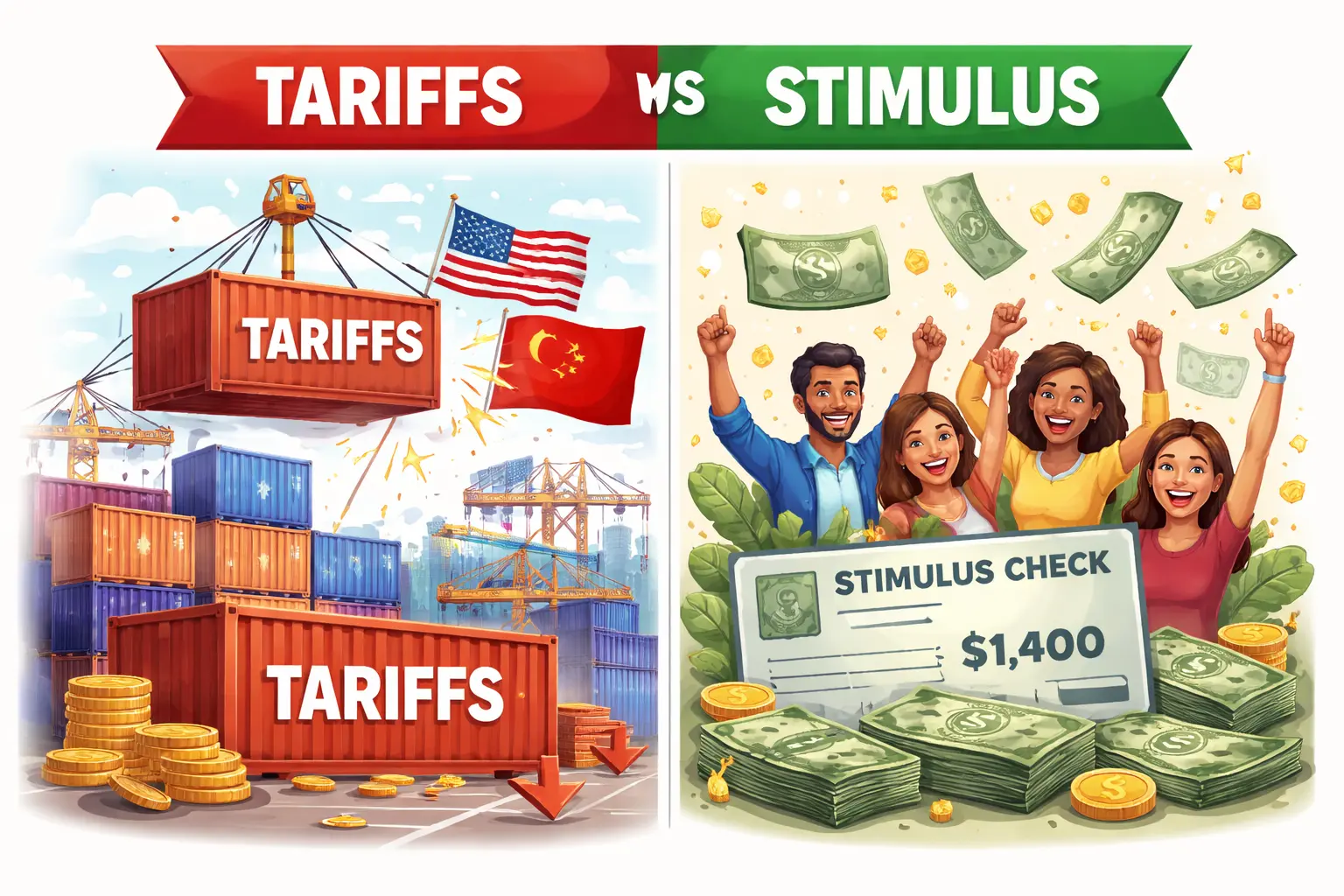
Overview of the $2,000 stimulus in 2026
Proposals for a $2,000 stimulus payment in 2026 have appeared in policy discussions and political announcements. Most versions aim to deliver a one-time payment to qualifying households to boost consumer spending and support families facing higher costs.
The stimulus is not automatic. It depends on legislation passing through Congress or executive actions that alter tax or benefit rules. Timing and eligibility are central to how effective a payment would be.
What is in Trump tariff plan and why it matters
The trade measures tied to President Trump’s tariff plan focus on raising duties on certain imports to protect domestic manufacturers and increase federal revenue. Tariffs can change supply chains, consumer prices, and government receipts.
Higher tariffs could affect prices for goods that Americans buy every day. When combined with a stimulus payment, tariffs can shift where and how much people spend.
Key elements of the tariff plan
- Increased duties on targeted categories like electronics, appliances, or select Chinese imports.
- Potential use of tariffs as leverage in trade negotiations.
- Possible exemptions or phased approaches for certain industries.
How tariffs could affect a $2,000 stimulus payment
Tariffs and stimulus payments interact in several ways. A single $2,000 payment is direct cash to households, while tariffs indirectly affect household budgets by changing prices.
If tariffs raise retail prices, the real purchasing power of a $2,000 payment could fall. Conversely, if tariffs preserve domestic jobs and raise incomes in certain sectors, some households might see offsetting gains.
Practical effects to expect
- Short-term boost in spending from direct payments.
- Higher prices on tariffed imports, reducing the effective value of the stimulus.
- Potential gains for workers in protected industries, which might reinforce the stimulus’s impact locally.
Eligibility, timing, and distribution scenarios
Different proposals set different rules for who receives the $2,000. Common eligibility frameworks include adjusted gross income limits, social security recipients, and tax-filing status.
Distribution could follow existing channels such as IRS direct deposit, Social Security payments, or new one-off checks. Timing ranges from immediate (within weeks of a law) to phased rollouts over months.
Typical eligibility examples
- Single filers under a defined AGI threshold — full payment.
- Phase-outs for middle- and upper-income households.
- Automatic payments for Social Security and SSI recipients.
Tariffs can raise government revenue like a tax. But economists often find that tariffs act mainly as a consumer price increase rather than a net gain for the federal budget after economic feedbacks.
Practical steps to prepare
Whether you expect a stimulus payment or face higher tariffs, there are practical actions you can take. Preparing helps protect the real value of any payment and your household budget.
- Confirm your direct deposit info with the IRS or Social Security to speed payments.
- Review your monthly budget for items likely affected by tariffs, such as electronics and appliances.
- Consider delaying large purchases if you expect price volatility or shop for domestic alternatives.
- Follow credible news sources for official announcements and implementation timelines.
How businesses should assess the combined impact
Companies that import goods or use imported parts need to map exposure to tariffed categories. A $2,000 stimulus can increase consumer demand, but higher input costs can squeeze margins.
Small changes to procurement or pricing strategy can reduce risk. Long-term choices may include diversifying suppliers or investing in domestic production where cost-effective.
Business checklist
- Identify top imported inputs and their tariff vulnerability.
- Model price and demand scenarios with and without the stimulus payment.
- Communicate changes to customers and suppliers early to manage expectations.
Real-world example: Small appliance retailer in Ohio
A small appliance retailer in Cleveland anticipated a $2,000 payment and a tariff increase on imported washing machines. The store expected higher demand but also higher wholesale costs.
Actions they took included accelerating orders for bestselling models before tariff implementation and promoting locally made models to price-sensitive customers. The result was steady sales growth while maintaining margins on key SKUs.
What to watch next
Key signals to monitor are congressional action on stimulus legislation, official tariff schedules, and implementation timelines from customs authorities. These determine real-world effects on households and businesses.
Stay informed by checking the Treasury, USTR, and IRS websites for verified guidance. Local news and trade groups often summarize implications for specific industries.
Summary and final advice
A proposed $2,000 stimulus in 2026 could provide short-term relief but its real value depends on policy details and broader economic policy like tariffs. Tariffs tied to the plan can raise prices and change the distributional effects of any payment.
Take practical steps now: confirm payment channels, review budgets, and plan for potential price changes. For businesses, assess supply chains and model scenarios to stay resilient.